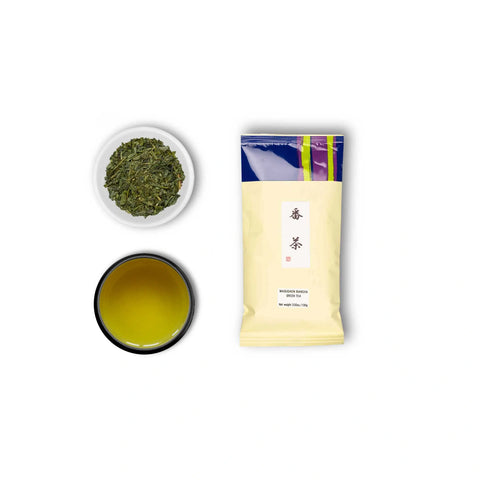
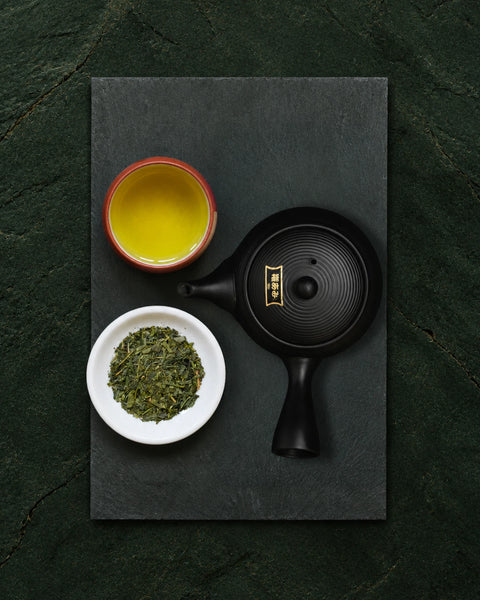
Bancha is made from the later harvests of the year and from the larger, coarser leaves left behind once the finest ones have gone into sencha. Those leaves have spent longer in the sun, so they hold fewer amino acids and less caffeine, and the tea they make is mild, plain and easy on the stomach. It is the everyday household tea in Japan, drunk through the day and after meals rather than savoured. Brew it hot and quickly — bancha is not delicate and does not need coaxing out. Expect a light golden-green cup with a mild, slightly woody character rather than the sweetness of a first-flush tea.
Tea Artisan: MasudaさんShizuoka
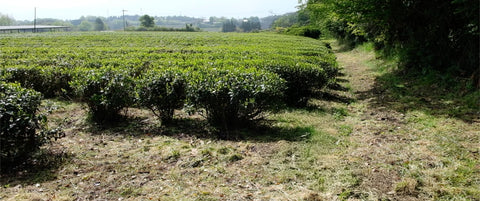
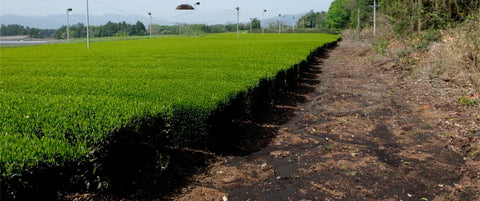
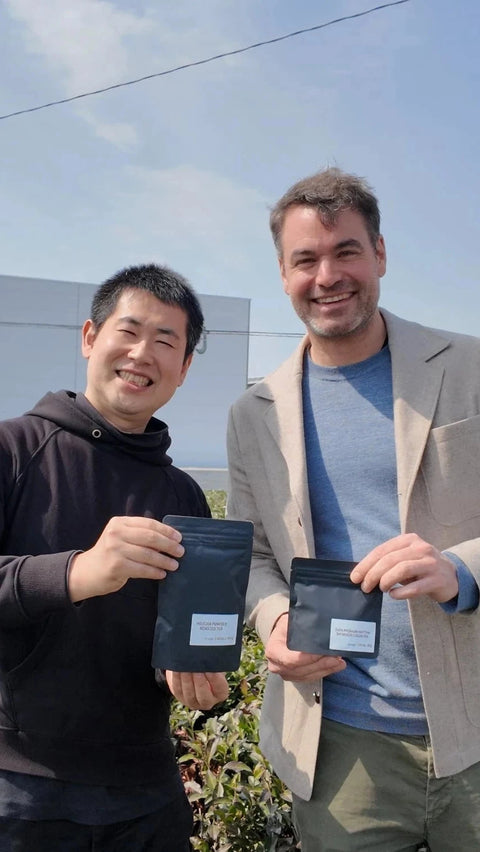
The bancha is cultivated by Mr. Masuda, a skilled tea farmer from Shizuoka who oversees a larger tea field. During our visit to his farm, Mr. Masuda gave us a comprehensive tour of the tea production process, from growing to packaging.
It took us awhile to find a bancha we really liked in Japan, but once Mr. Masuda introduced us to this one, we knew it was special right away. This tea is quickly becoming among our most popular, particularly with beginners.
Origin: ShizuokaJapan
This bancha is produced on the Makinohara plateau in Shizuoka. The farm is quite large, with a few different microclimates that are perfect for different kinds of green tea. We visited the farm in the Summer of 2018 to learn more about tea cultivars and taste the different types of teas grown here.
Cultivar: YabukitaTea variety
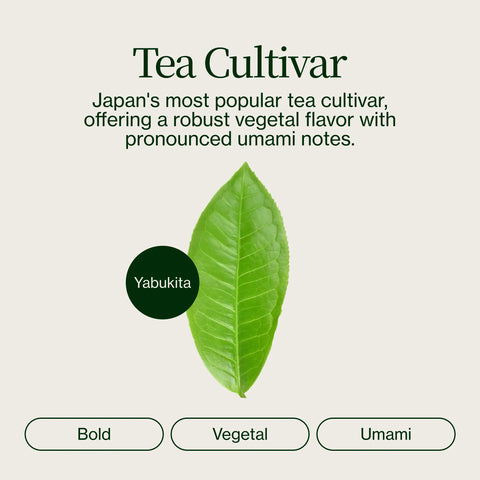
This bancha is made from the Yabukita cultivar, the most common type of tea variety in Japan, making up 75% of the countries total tea production.
Yabukita: There are 2 main reasons why the Yabukita cultivar is so popular. The first is that the tea plant varietal is more resistant to frost, and therefore it can withstand the comparatively cold winters of Central Japan. Also, the tea produces a strong savory and vegetable flavor a lot of tea drinkers enjoy!
Preparation & ServingsUp to 40 cups
Hot brew: 5 g of leaves, 150 ml of water at 70°C (158°F), 1 minute.
Brew it again: the same leaves give 2 infusions. Re-infuse once more with water at the same temperature, 20 seconds each; every infusion tastes a little different.
Cold brew: best enjoyed hot, we do not recommend cold brewing this tea.
One pack: Up to 40 cups · 20 × 5 g servings, 2 infusions each · 100 g / 3.5 oz.
Why choose Nio Teas?
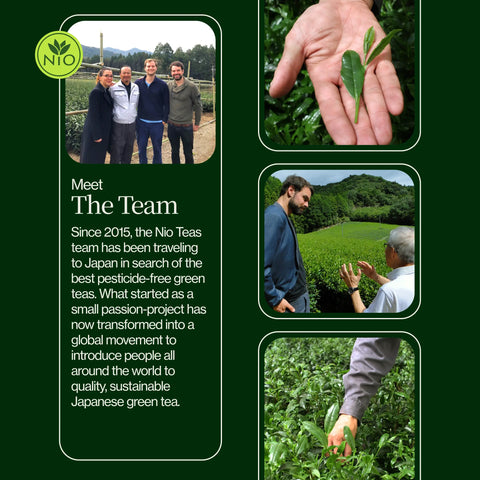
For us, tea is more than a beverage, it’s a way of life. We’ve spent years visiting tea farms across Japan, tasting teas with the people who grow them and building lasting, direct relationships. We believe this is the most sustainable way to source tea: fewer intermediaries, greater traceability and a closer connection between farmer and drinker.
Every tea is 100% pesticide-free and carefully selected for its taste, origin and craftsmanship. Whether you’re discovering Japanese tea or comparing cultivars and terroirs, you’ll find honest tasting notes, precise brewing guidance and real support to help you get the best from every cup.
Typical values per 100 ml of brewed tea, from the Standard Tables of Food Composition in Japan (MEXT, 8th edition), bancha infusion (food no. 16039; 15 g leaf, 650 ml water at 90°C, 30 s). Values in your cup vary with the leaf, the water and the brewing time.
Complete Your Tea RitualNo Kyusu at home? No problem!
100% Pesticide-FreeDirect from FarmersPure & UnblendedSingle-Origin TerroirSmall-Batch HarvestAuthentic Japanese Craft
Unveiling Bancha's Superfood Power
•
Caffeine
Natural caffeine for a gentle, sustained lift.
•
Antioxidants
Rich in catechins and other naturally occurring antioxidants.
•
Chlorophyll
Naturally rich in chlorophyll, the pigment behind matcha’s vibrant green colour.
•
Potassium & Calcium
Naturally occurring minerals that contribute to matcha’s nutritional profile.
•
L-theanine
An amino acid naturally found in tea, associated with a calm, focused feeling.
•
Vitamins A, C, E & K
Contains a range of vitamins naturally present in the whole tea leaf.
Why Buy Your Bancha from Nio Teas
No middlemen, no pesticides, no risk.
30-Day Satisfaction Guarantee
Try it with confidence. If it isn’t right for you, contact us within 30 days.
15 Japanese Tea Farmers
Our tea brings together the craft and regional expertise of 15 partner farmers across Japan.
Direct from Farmer to Cup
We build lasting relationships with our farmers for fewer intermediaries and greater traceability.
100% Pesticide-Free Bancha
Every Bancha is grown without pesticides, then personally tasted and selected by our team.
How to Make Bancha Like a Pro
To get the best out of your bancha, we recommend you follow these instructions. Bancha is a bit more forgiving when it comes to brewing temperature, so if you brew the tea a little bit too hot or for a little bit too long, it’s generally not much of an issue.
Heat the Water
Heat water to 70°C (158°F).
Add the Leaves
Add 5 g of leaves to a kyusu teapot.
Steep
Pour 150 ml of water and steep for 1 minute.
Pour & Brew Again
Pour out every drop, then brew the same leaves once more (20 seconds).
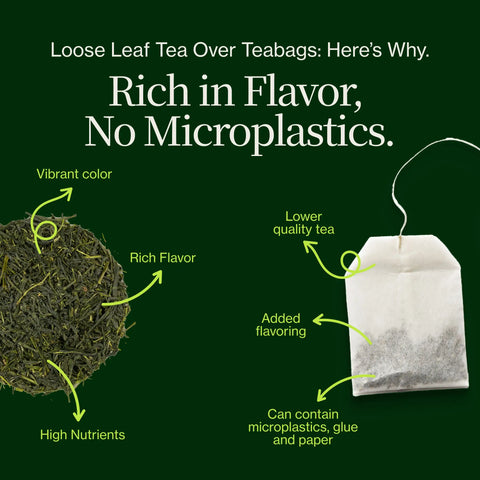
Loose Leaf Tea Over Teabags
Rich in Flavor, Not in Microplastics.
Ceremonial and latte matcha from one Shizuoka field.
Farmer: Masudaさん
Mr. Masuda is a skilled tea farmer in Shizuoka who manages a large tea field and oversees every step, from growing to packaging. He uses the prized first harvest to make ceremonial matcha smooth enough to drink on its own, and later harvests for matcha that works beautifully in lattes.
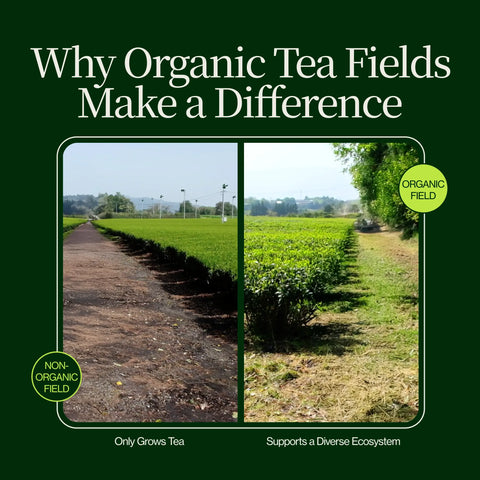
Why Organic Bancha Fields Make a Difference
Tea plants absorb everything from the soil, making pesticide-free farming especially important. The farmers we work with have found a way to grow delicious tea without harming the natural ecosystem.
Nio teas has been my favourite place to purchase good quality teas for a while now, and still they never disappoint me. Their teas are excellent quality, however, I’d like to give more attention to customer service - Nio team has been very kind and helpful each time I had any sort of problem. Their customer service never disappoints, they are very attentive and quick in responding to any queries, hence why I’ve been a loyal customer for a while now.
Apr 1, 2026
5 out of 5 stars
5/5
Sean
My favorite vendor for Japanese organic loose leaf green teas. They are sourcing some of the best organic teas out of Japan and supporting family farmers and the growing organic tea industry as a whole.I have ordered from every vendor for years and Nio consistently has the best prices and selection overall. They provide top notch customer service and fast shipping as well. Highly recommended 🍃
Shipping is free once your order passes the threshold for your country — USD 54.99 · EUR 54.99 · GBP 44.99 · CHF 49.99 · CAD 74.99 · DKK 399 · SEK 599 · PLN 229 · CZK 1,290. Everywhere else it's the equivalent of USD 54.99, converted automatically. Below the threshold a flat rate applies, always shown at checkout before you pay.
We ship from warehouses in the US, the EU and Japan — whichever is closest to you. US and EU orders arrive in 4–12 business days; the handful of countries served from Japan take around 10. Business days count from dispatch rather than from when you order, and exclude weekends and public holidays. You'll get a tracking number by email the moment your parcel leaves the warehouse.
We only buy from fields grown without pesticides or chemicals. We ask each farmer directly how they manage their land, visit the plantation and processing facility ourselves, taste every harvest before committing, and check that the biodiversity around the fields is alive. Small family farms don't always carry paperwork — so we verify it in person instead.
Japanese green tea covers an enormous range, and choosing online isn't easy. If you've tried yours and it isn't for you, email info@nioteas.com within 30 days with your order number and a line on what you didn't enjoy. We'll send a different tea of equal or lower value, free. Nothing to post back — keep it, share it, or try brewing it cooler. Once per order.
Email info@nioteas.com within 30 days with your order number and a photo. We'll approve it, cover the return postage with a prepaid label or a reimbursement, and refund you — no restocking fee. Refunds go to your original payment method within 2 business days of the return reaching us; your bank may take another 5–20 to show it.
Unopened items in their original packaging can be returned within 30 days. Tea is sealed for hygiene, so opened packs can't come back — but the swap above covers exactly that situation. Return postage is yours unless the item arrived damaged, defective or incorrect.
Orders to the US and EU ship domestically from our local warehouse, so there's no customs charge and no duty. A small number of destinations are served from our Japan warehouse, where your own customs authority may apply import duty, VAT or a carrier handling fee on delivery. Those are set by your country, not by us. Ask before you order and we'll help you check.
info@nioteas.com or +41 79 751 83 88. We reply within 2 business days, usually much sooner, in English.
Customer Reviews
Overall rating: 4.8 / 5 from 50 reviews.
Thank you so much for sending the replacement order! The first shipment was lost locally and you sent me out a new order! This Bancha tea is worth it every time. This is such a relaxing and soothing tea. I use it for morning tea as well as afternoon and before bed!
This is a great tasting tea. I quit coffee recently and I was looking for an affordable tea that can be steeped throughout the day. Following the directions I’m able to make more than three cups with the same leaves. I like the flavor profile of each cup. I wish that there were more varieties of bancha to choose from.
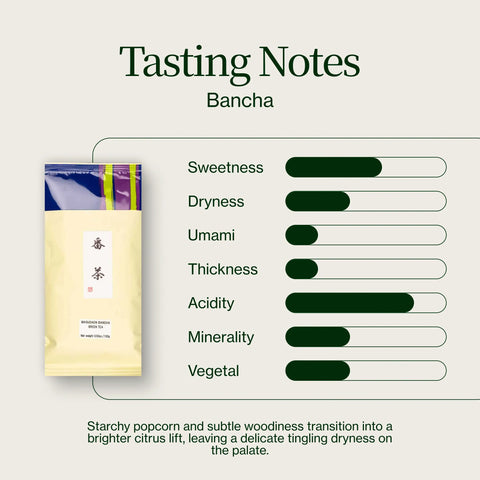
This bancha by Masuda-san may be the best quality Bancha I've ever drunk before. It's a cheap yet valuable! This tea is the best afternoon or after a rich meal helping you to digest it better. It is a full body, the bitterness pleasantly hits your taste buds without indisposition along with the nice acidity a nice bancha should have. The cereal smell and nutty flavour can also be pleasant as well for those who doesn't like the vegetal, grassy, savory notes of Japanese green teas, so I could even notice robust tones to the wet leaves after one or two infusions. The tea barely looses its flavour, that's why I infuse it 4 times. You can use 70°C for the first infusion and 75°C - 80°C for the second with no fear, the flavor remains with pleasant bitterness and low astringensy, the acidity dominates with its tingling sensation in your palate in a good way along with a nice sweetness.
I'm really enjoying this tea. It's very light and has a really nice refreshing taste. I definitely enjoy sipping on the weekends. Love that one can brew up to three times. The flavors come out after each brew.
Great, subtle tasting green tea, can be drank all day without affecting my sleep even though I'm quite sensitive to caffeine.
Since you can rebrew the same leaves multiple times, one packet of tea can last a long, long time.
This is my go-to tea now!
Masudaen Bancha, a sample gift from Nio.
It's mild, woody and slightly acidic. A gentle tea for winding down in the afternoon or after a meal in the evening.
A very mild flavor and the color was more of the pale golden yellow-green found more in Chinese green teas. Personally I like my teas on the stronger side, so I would probably brew this one a little hotter next time and use 100-120 ml instead of the 150. A very lovely tea with a lower caffeine content (I actually had a nap afterwards), so probably better for late afternoons
This bancha itself smells wonderful. It's intensely aromatic, with a sharp, really bright fragrance that smells like freshly clipped tea leaves. It's a very layered tea with a nice body, but it bites a little hard. It really reminds me of tea leaves that have just been pulled off the bush and brewed without any additional processing. It's got a bright astringency that translates into an almost spicy, sort of Sichuan peppercorn numbness on the tongue and roof of the mouth.
E' la prima volta che acquisto questo tè Bancha e ne sono molto soddisfatta, perchè è erbaceo, fresco e dolce, come piace a me. Il fatto poi che sia stato coltivato senza pesticidi lo rende, per me, un prodotto eccezionale.
I am not a tea expert. Not even close. However I do enjoy the various sensha teas I've been getting from Nio. This time I thought I'd try Bancha, partly because it is so inexpensive and partly to try something different.
I can drink it but I can't say I enjoy it as a special treat that is pleasant to sit and sip. I very often mix the brewed Japanese tea with an herb tea like hibiscus flower, and the Bancha seems to be suitable for that because I'm not wanting to really taste the flavor of the Bancha.
We live and learn and I've learned that I should probably stay with the mid priced Sencha teas. Thanks to Nio for providing the vast assortment from which to choose.
After the COVID shot I began having a bitter taste in my mouth. Eventually I couldn’t drink anything but water. But I had the idea of trying a weak low acid tea. A weak tea is made with water you can put your finger in and is only steeped a short time. It worked. This green tea tastes good to me