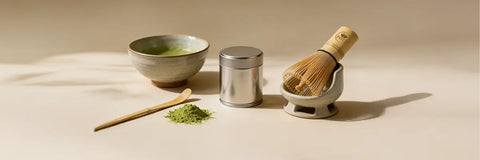
A matcha sifter canister is a two-in-one tool that breaks up powder clumps and stores the sifted matcha ready for scooping, all inside a single sealed container.
Unlike sifting directly over the bowl before each cup, this design lets you process a larger portion in one step, which removes the most repetitive part of the daily preparation routine.
The difference in texture between pre-sifted and unsifted matcha is noticeable the moment you start whisking, and even more apparent in the finished cup.
This article covers how the canister works, why matcha clumps in the first place, how a sifter tin compares to standard storage, how it changes foam quality, the main design types available, and when the tool genuinely earns a place in your setup.
If you have been dealing with grainy matcha or inconsistent results, understanding why a matcha sifter matters will clarify where the problem starts, almost always before the water is ever added.
A Matcha Sifter Canister Pre-Sifts and Stores Matcha Together

A matcha sifter canister combines two functions in one tool: it breaks up clumped powder through a fine mesh screen and stores the sifted matcha ready for daily use. This produces smoother whisking, more even foam, and a more consistent cup without needing to sift before every preparation.
What comes through the mesh is light, aerated powder with no compressed clusters. That single step changes how evenly the powder disperses in hot water and directly affects how the chasen builds foam across the surface of the bowl.
Choosing a matcha sifter canister with a 40-mesh screen, which means 40 openings per linear inch, produces a noticeably finer result and is the right choice for ceremonial-grade matcha where texture expectations are highest.
The Mechanics Inside the Canister
Most matcha sifter canister designs include a removable mesh basket sitting above a sealed base. Some models use small metal rings or balls that roll across the mesh when shaken. The weight and material of these components directly affect sifting efficiency, which is covered in detail in this guide to matcha sifter weights.
The lid seals tightly after sifting, so the processed powder stays protected from air, humidity, and kitchen odors until you are ready to scoop. This is what separates it from a standalone strainer, which offers no storage function at all.
How Much Matcha to Sift at Once
Standard canisters hold between 30g and 150g, depending on the model. For daily drinkers, processing 30 to 50g at a time keeps pre-sifted powder fresh without leaving it exposed for too long.
Sifting every three to four days is a practical rhythm that balances convenience with maintaining the powder in its best condition. If a full canister is more than you need, a smaller format may fit better into your daily routine. 👉 Small Sifter for Matcha and Why Size Matters
Why Matcha Clumps Inside Regular Containers
Matcha particles are ground to between 1 and 20 micrometres in size. At that scale, static electricity builds up during grinding, packaging, and repeated scooping, causing particles to bond together into dense clusters.
Moisture accelerates the problem significantly. Brief exposure to steam from hot water, condensation from the refrigerator, or ambient kitchen humidity can cause sections of the powder to pack tightly together. A matcha sifter canister is specifically designed to address this at the storage stage, before whisking begins.
Many of the clusters are compact enough to survive even vigorous whisking, then settle at the bottom of the bowl or stick to the sides, leaving both texture and experience worse than they should be.
Matcha Tin With Sifter vs Standard Matcha Storage

A standard matcha tin is designed only to protect powder from light and air. It does a reasonable job of preservation, but every scoop comes from a mass of powder that has been sitting compressed and untouched since the last time the lid was opened.
A matcha tin with sifter adds a processing function to the same container. Sift once, seal the lid, and every scoop from that point is already aerated and lump-free. There is no separate sifting step at preparation time.
Storage Quality in Each Design
Both designs, when made from tinplate or stainless steel, protect the powder adequately from light and heat. The difference is what happens to the matcha while it sits inside. A plain tin holds it. A matcha sifter container actively improves the condition of the powder each time you refill and sift.
For everyday use, building the sifting step into the storage removes friction from the routine without changing the protection characteristics you already rely on.
Which Design Suits Your Routine
If you drink matcha once or twice a week and do not yet own a dedicated tool, there are practical methods for sifting matcha without a sifter that work as a short-term solution before you invest in a canister. If you prepare matcha every day or want a cleaner countertop setup, combining both functions into one tool is the more practical choice.
Nio Teas carries a range of matcha accessories designed to make daily preparation more consistent, including tools that support both storage and sifting. Building a complete matcha setup from scratch? 👉 Choosing the Right Japanese Tea Set
How a Matcha Sifter Container Improves Texture and Foam
Foam quality in matcha depends on how evenly the powder disperses in water. Clumped particles create uneven pockets during whisking where some areas dissolve quickly while others stay dense, producing inconsistent froth across the surface.
A matcha sifter canister solves this at the source and when paired with the correct technique for using a chashaku to scoop, every element of the preparation becomes more precise and consistent. Aerated powder disperses more evenly the moment it enters the bowl, giving the chasen the conditions it needs to produce a uniform suspension with finer, more stable microbubbles.
The improvement is especially clear in usucha, the thin-tea preparation style where a creamy and consistent foam across the top is the standard. Even high-grade ceremonial matcha underperforms when the powder goes in unsifted.
Different Types of Matcha Sifter Tins and Containers
The most common design for a matcha sifter tin uses tinplate or stainless steel with a removable mesh basket and a push paddle inside. You press the powder through with the paddle, which is straightforward but takes slightly more effort than shake-style designs.

Shake Mechanism vs Paddle Mechanism
Shake-style canisters include metal rings or balls that roll across the mesh when the container is moved sideways. They are faster for sifting larger quantities and create less mess on the counter. The trade-off is that the moving parts require more care when cleaning.
Paddle designs are more widely available, easier to rinse, and well suited to the amounts most people process at home. Both mechanisms produce the same result in terms of powder quality when used correctly.
Material Considerations for Everyday Use
Stainless steel mesh lasts longer and resists corrosion better than nylon or plastic alternatives. For a tool used daily with a fine powder, stainless steel is the more durable and hygienic choice over time.
The lid should seal tightly. A loose-fitting lid allows moisture to enter between uses and undermines the entire benefit of sifting in the first place. Japanese-made matcha sifter canisters tend to have tighter tolerances on lid fit, which matters when choosing a model intended for daily use.
When a Matcha Container With Sifter Makes the Most Sense
The case for a matcha container sifter is strongest when your routine involves more than one cup a day, or when you are preparing matcha for guests, where consistency matters. Having pre-sifted powder ready means the only variables at preparation time are water temperature and whisking technique.
It also makes sense if you transfer matcha from larger bulk bags. Powder that has been compressed during shipping benefits most from sifting before it goes into storage, not just before each individual cup.
For Ceremonial Matcha Specifically
Ceremonial-grade matcha is ground more finely than culinary grades, which means it clumps more readily during storage. A matcha sifter canister protects that investment by ensuring the powder is processed correctly before it is ever stored or scooped.
Understanding what separates ceremonial from culinary matcha helps at both the purchasing and preparation stages. Nio Teas has a detailed breakdown of both grades, worth reading if you are deciding which to stock for regular use.
For Matcha Lattes and Cold Drinks
Sifting matters for lattes, too, for a slightly different reason. Clumped matcha does not dissolve evenly in cold or plant-based milks, which tend to be thicker than hot water. Pre-sifted powder blends more smoothly and does not settle at the bottom of the glass.
If you prepare iced matcha lattes at home regularly, keeping a matcha sifter can on the counter with a portion of pre-sifted powder ready is one of the simplest, most effective upgrades to your daily drink quality.
Why a Matcha Sifter Canister Improves Daily Preparation
A matcha sifter canister is less about adding another accessory and more about removing friction from the preparation process. By combining storage and sifting into a single step, it makes consistent matcha easier to prepare day after day without interrupting the rhythm of the routine.
For people who drink matcha regularly, that convenience becomes meaningful quickly. The powder stays ready to scoop, the preparation becomes cleaner and faster, and the results stay more consistent from one bowl to the next.
Whether you prepare traditional usucha or iced matcha lattes, a well-designed canister helps eliminate one of the most common sources of poor texture before the whisking process even begins.