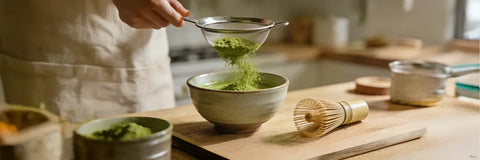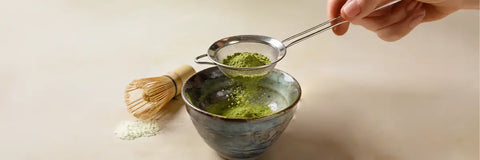
Do you need a sifter for matcha? Yes, and the difference it makes is not subtle. Matcha powder is extremely fine. That fineness is a quality marker, but it also means the powder clumps as soon as it touches air humidity.
When clumps hit water, they often resist dissolving completely. They stay intact, which dilutes the flavor and leaves your drink tasting flat and watery in patches.
A sifter takes about 10 seconds to use and largely solves the problem. The result is smoother texture, better foam, and a more even, concentrated taste in every sip.
This article covers why clumps form, what a sifter actually does to your cup, what Japanese tea masters use, and what to reach for when you do not have one.
If you are looking to level up your matcha preparation, start here.
Do You Need a Sifter for Matcha? Yes, for Better Texture and Foam

Do you need a sifter for matcha? The answer is yes if you want a smooth, properly prepared cup. Skipping this step is the most common reason home-prepared matcha ends up grainy, uneven, or bitter in places.
The issue is not about convenience. It is about what happens to unsifted clumps once they enter your bowl. They resist the chasen, float to the surface, and create an uneven concentration of matcha in the liquid. Some sips taste too strong, others too weak.
Sifting levels the powder into a fine, even layer so the water and whisk can do their job properly.
Why Matcha Forms Clumps in the First Place
Matcha is ground to a particle size of around 5 to 10 microns. At that scale, individual particles carry a weak electrostatic charge that pulls them together the moment moisture in the air touches the powder.
This happens even inside a sealed tin. Every time you open your matcha, the exposed surface picks up ambient humidity. Within minutes, clumps begin to form. This is not a sign of bad quality. It happens to premium matcha too.
Temperature also plays a role. Matcha stored in a cold fridge and then brought into a warm kitchen can pick up condensation on the powder, speeding up clumping. The finer and fresher the matcha, the more sensitive it is to this.
How a Matcha Sifter Improves Texture, Foam, and Flavor
The importance of sifting matcha goes beyond aesthetics. It directly affects three measurable qualities in your cup: texture, matcha foam volume, and flavor consistency.
Better Mixing and Fewer Clumps

When matcha is sifted, the fine particles separate fully and sit loosely at the base of the bowl. As you add water and begin whisking, the chasen can penetrate evenly through the powder without resistance from packed clumps.
The result is a homogenous suspension. Every part of the liquid carries the same concentration of matcha, so the flavor is consistent from the first sip to the last.
Smoother Mouthfeel and Richer Taste
Unsifted matcha that retains clumps creates a gritty, uneven mouthfeel. Some clumps that survive whisking settle at the bottom of the bowl or stick to the sides. That grit is distracting and pulls attention away from the flavor.
Sifted matcha disperses completely, giving the liquid a silky, thick consistency. This is particularly noticeable with ceremonial grade matcha, where the umami and sweetness are meant to come through cleanly rather than being interrupted by texture. If you ever questioned do you need a sifter for matcha just for taste reasons, this is the answer. Getting the most from your ceremonial matcha starts long before whisking 👉 Complete Ceremonial Matcha Preparation
Do Japanese Tea Masters Use a Matcha Sifter
In traditional Japanese tea ceremony, a sifter called a furui is used as standard. The matcha is pre-sifted before guests arrive so the host can focus on the ritual of preparation rather than the mechanics.
The furui is a small, fine-mesh sieve with a lid and a base tray. Matcha is pressed gently through the mesh using a small brush or the back of a spoon. The pre-sifted powder sits in the tray ready for use throughout the ceremony. A modern take on the same concept is the sifter canister, which combines storage and sifting in one tool 👉 Matcha Sifter Canister and Why It Improves Daily Matcha Preparation
This confirms that the importance of a matcha sifter is not a modern convenience argument. It is embedded in the traditional process. The furui has been part of the traditional matcha equipment for centuries, used alongside the chasen, chawan, and the chashaku, the bamboo scoop used to measure the powder before sifting.
What Can You Use If You Do Not Have a Matcha Sifter
A fine-mesh kitchen strainer works just as well as a dedicated tool, though if you want a purpose-built option, a small sifter for matcha takes up almost no counter space and fits precisely over most chawan. So, if do you need a sifter for matcha is the question, the more precise answer is: you need something with a fine mesh, and a kitchen strainer qualifies. The mesh on most kitchen sifters and small strainers is close enough to that of a dedicated matcha sifter to break up clumps effectively. Hold it over your chawan, add the matcha, and press gently through with a spoon.
A small cocktail strainer or tea infuser with a tight mesh can also work in a pinch, though the opening may be smaller and take a bit longer. Avoid tea balls with coarse mesh, as the holes are too large to catch fine matcha clumps.
One alternative method is the paste technique. Add a few drops of water to your measured matcha and mix it into a paste before adding the rest of your water. This manually breaks up clumps before whisking and produces decent results when no sifter is available. It is not quite as effective as sifting, but it is a practical workaround.
More Ways to Use a Matcha Sifter Beyond Tea
A matcha sifter earns its place beyond the morning bowl. Once you have one, it becomes useful across a range of matcha applications.
Matcha Baking and Desserts

Culinary grade matcha for baking clumps just as readily as ceremonial grade. When matcha is added to cake batter, cookie dough, or ice cream bases without sifting, the clumps often survive mixing and create bitter green pockets in the finished product.
Sifting culinary matcha directly into dry ingredients before mixing ensures even color distribution and a consistent flavor throughout. This applies whether you are making matcha donuts, matcha shortbread, or a sponge cake, any baked recipe where even color and flavor distribution matters.
Dusting Food and Creating Matcha Toppings
A sifter gives you control when finishing dishes with a dusting of matcha. Whether you are finishing a latte with a light green layer, dusting over a dessert plate, or adding a matcha topping to yogurt, the sifter distributes the powder in a fine, even cloud rather than dumping clumped patches.
This is the same reason bakers use a fine sifter for icing sugar or cocoa powder. The visual result is sharper and more intentional.
Is a Matcha Sifter Worth Buying
A dedicated matcha sifter costs very little and lasts for years. The mesh is cut finer than most kitchen strainers, which makes it slightly more efficient with very fresh, high-quality matcha that has a particularly fine particle size. This is also why do you need a sifter for matcha; the higher the grade you are using. Not all sifters are built the same, mesh density and weight affect how efficiently they break down fine particles 👉 What Matcha Sifter Weights Actually Do
If you already have a fine-mesh kitchen strainer, that will do the job. But if you are building a proper matcha setup, a dedicated sifter is a sensible addition. It takes up minimal space, sits neatly alongside your chasen and chawan, and makes every preparation cleaner.
Nio Teas carries a range of matcha tools and accessories, including sifters, whisks, and bowls, designed for consistent home preparation. If you are already using quality ceremonial grade matcha, pairing it with the right tools makes a real difference in the cup.
You can also explore Nio Teas' guide to matcha tools and preparation for a closer look at how each piece of equipment affects your final result.