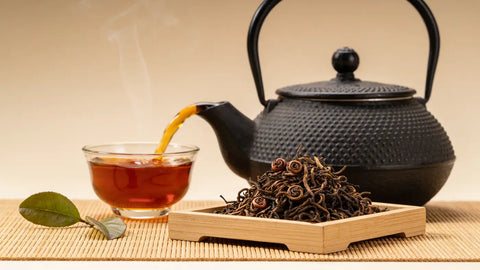
Wakoucha black tea benefits include antioxidant support, gentler digestion, and calm, sustained energy thanks to its combination of polyphenols, L-theanine, and moderate caffeine.
People who discover wakoucha black tea benefits for the first time are often surprised by how different this cup feels from standard black teas: sweeter, softer, and far gentler on the stomach.
Wakoucha literally translates to 'Japanese black tea.' It is produced from cultivars like Yabukita and Benifuuki, varieties that retain higher levels of L-theanine and amino acids even after full oxidation.
Those who have explored wakoucha tea benefits in depth tend to find three things stand out: antioxidant quality, digestive gentleness, and the kind of calm focus more commonly associated with green tea than black.
This article covers exactly which compounds drive those effects and who gains the most from making wakoucha a regular cup. If you are new to Japanese black tea, our broader guide to Japanese loose leaf teas is a useful starting point.
Wakoucha Black Tea Benefits Start with Its Chemistry

Wakoucha black tea benefits come from its high antioxidant content, retained L-theanine, and lower tannin levels, which support steady energy, digestive comfort, and overall wellness. Japanese sinensis cultivars such as Yabukita and Benifuuki were originally developed for green tea production and differ genetically from the assamica varieties commonly grown in India and Sri Lanka. As a result, these cultivars naturally contain higher amino acid levels, giving wakoucha a smoother character and a different physiological profile from many conventional black teas.
Polyphenols and Antioxidants in Japanese Black Tea
Wakoucha contains polyphenols in two distinct forms. The first are residual catechins that carry over from the green leaf stage, compounds more commonly studied in green tea. The second are theaflavins and thearubigins, which form during oxidation and are unique to black tea.
Research published in the Journal of Nutrition confirmed that theaflavins carry antioxidant activity at least comparable to the catechins in green tea. In wakoucha specifically, both compound groups are present in the same cup, giving the tea a broader antioxidant spectrum than a typical single-source black tea.
The Role of Catechins and Theaflavins
During oxidation, catechins convert enzymatically into theaflavins, the golden-orange pigments responsible for black tea's colour. More than 20 distinct theaflavin derivatives have been identified. These compounds have been studied for their link to healthy cholesterol levels, cardiovascular support, and anti-inflammatory activity.
Because wakoucha retains some original catechins alongside newly formed theaflavins, each cup provides a broader antioxidant base than a conventional Assamica black tea. That combination is uncommon in any single black tea and is a direct consequence of using green-tea cultivars for the production process. To understand what happens inside the leaf during oxidation, this article explains the full journey. 👉 How Is Black Tea Made from Fresh Leaves to Finished Tea
The Most Practical Wakoucha Black Tea Benefits for Daily Life
When drinkers start looking for wakoucha black tea benefits that show up in daily life rather than in laboratory conditions, three areas stand out consistently. These effects build with one to two cups per day over a sustained period, not from extreme intake.
Daily Antioxidant Support Without Harshness
One of the most valued wakoucha tea benefits is the antioxidant support it provides without any of the bitterness that accompanies high-polyphenol teas from stronger cultivars. The combined theaflavin and residual catechin profile delivers meaningful coverage against oxidative stress in each cup.
Regular polyphenol intake through tea has been studied in relation to cardiovascular health, immune function, and cellular protection. Wakoucha makes daily consistency easy because its flavour invites repeat drinking without needing milk or sweetener.
A Gentler Black Tea Experience for Sensitive Stomachs
Many people who enjoy black tea find that standard Assam or Ceylonese varieties cause digestive discomfort on an empty stomach. Wakoucha's lower tannin content changes that significantly. The moderate tannin levels can support healthy gut motility without the aggressive astringency that irritates sensitive digestion, a key reason why people concerned about whether black tea causes constipation often find wakoucha a far more comfortable option.
This makes wakoucha suitable for drinking before breakfast or between meals, a practical advantage over most black teas, which pair best with food to avoid stomach upset.
Calm Focus from L-Theanine and Caffeine

Among the wakoucha tea benefits most appreciated by people switching from coffee, the calm focus produced by L-theanine and caffeine together stands out. L-theanine modulates caffeine's stimulating effect, smoothing the energy curve and reducing jitteriness.
Japanese sinensis cultivars retain higher L-theanine levels after oxidation than most black tea varieties. Caffeine content sits at roughly 40 to 60 milligrams per cup. The net result is sustained, alert focus without the spike-and-crash pattern that coffee often produces.
How Wakoucha Differs from Other Black Teas
Understanding wakoucha tea benefits in context means understanding how fundamentally different this tea is from its Indian and Ceylonese counterparts. Those teas use assamica cultivars with larger leaves, higher tannins, stronger caffeine, built to carry milk and sugar.
The clearest way to see wakoucha black tea benefits is to compare it with another Japanese tea; for instance, if you are weighing wakoucha vs hojicha, the differences in oxidation, roasting, and caffeine profile reveal just how distinct each variety is within the Japanese tea family. Where the breakfast blend overpowers, wakoucha layers stone fruit, subtle floral notes, and a clean sweetness that needs no additives.
The processing precision Japan applies to green tea carries fully into wakoucha production. Oxidation is carefully monitored to develop flavour complexity without crossing into harshness. If you already drink Japanese teas like gyokuro or shincha, the move into wakoucha will feel entirely natural.
Who Benefits Most from Drinking Wakoucha Regularly
Wakoucha suits a specific kind of drinker well: someone who wants the energy and warmth of black tea but finds most varieties too aggressive. If standard black tea upsets your stomach or leaves you feeling anxious, the lower tannin content and retained L-theanine in wakoucha address both concerns without asking you to give up black tea entirely.
It also suits anyone reducing coffee intake. The L-theanine and caffeine pairing offers sustained alertness without the spike, and the natural sweetness removes the need for sugar.
People drawn to antioxidant-rich foods will find the theaflavin and catechin profile the most tangible of all wakoucha tea benefits: a consistent, bioavailable source of polyphenols in an enjoyable daily format with no preparation complexity.
Brewing Wakoucha to Get the Most from Every Cup
How you brew wakoucha directly affects how much of its value reaches you. Our dedicated guide on how to brew wakoucha covers every variable in detail, but the core principles are worth knowing here. Water at 100°C damages the more delicate amino acids and aromatic compounds in the leaf. The ideal range is 85 to 95°C, hot enough for full extraction, cool enough to preserve L-theanine and the tea's natural sweetness.
Use approximately three grams of loose leaf per 200 ml of water and steep for two to three minutes. Wakoucha is forgiving; a slightly longer steep will not turn it bitter the way most Indian black teas would. Filtered water makes a noticeable difference: hard or chlorinated water flattens the flavour noticeably. Storage matters as much as brewing: how long loose leaf tea lasts depends largely on how it is kept, and wakoucha's aromatic compounds are particularly sensitive to light, air, and humidity.
Nio Teas carries a curated selection of Japanese loose leaf teas, including wakoucha sourced from producers who apply the same exacting standards to black tea that have made Japanese green teas exceptional. New to brewing with loose leaves altogether? This is a helpful place to start. 👉 How to Make Loose Leaf Tea: Ratios, Methods, and Temperatures
Is Wakoucha Worth Adding to Your Tea Routine?

The wakoucha black tea benefits covered in this article are specific and traceable, not a repackaging of generic black tea health claims. The cultivar genetics, retained L-theanine, combined theaflavin and catechin profile, and lower tannin content all combine to produce a meaningfully different cup.
For anyone evaluating wakoucha black tea benefits against coffee or other black teas, the key differentiator is L-theanine retention. No conventional Assam or Darjeeling offers that same amino acid presence, and no green tea offers the theaflavin profile that comes from full oxidation.
One to two cups per day capture the antioxidant and cognitive wakoucha tea benefits without introducing excess caffeine. Whether your motivation is digestive comfort, steady focus, or antioxidant support, wakoucha delivers on all three, and if you want to get the most from the experience, learning how to drink loose leaf tea properly makes a noticeable difference to both flavour and ritual.
If you are exploring what Japanese tea culture has to offer beyond matcha and sencha, this is one of the most underrated places to begin.