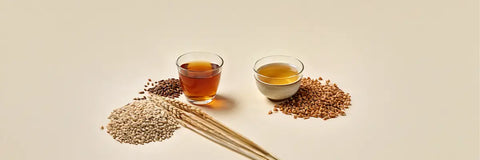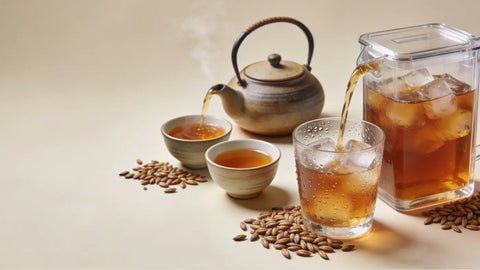
Mugicha nutrition facts include virtually zero calories, no caffeine, trace minerals such as potassium and magnesium, and antioxidants created during the barley roasting process.
Unlike green tea, mugicha, a word whose pronunciation and kanji often surprise first-time drinkers, is not made from the Camellia sinensis plant, meaning its entire nutritional profile is shaped by roasted barley, not tea leaves.
The result is a drink with no sugar, no fat, and no protein, but with trace electrolytes and plant compounds that make it far more interesting than plain water.
This article breaks down exactly what mugicha contains per cup, where those nutrients come from, and how the numbers compare to green tea and common soft drinks.
If you are looking at Japanese teas for daily hydration or as a caffeine-free alternative, read this before you decide.
Mugicha Nutrition Facts: Near-Zero Calories with Trace Minerals and Antioxidants

Mugicha nutrition facts are, on the surface, deceptively simple. Per 240 ml brewed cup, you get approximately 2 calories or fewer, 0 g fat, 0 g protein, and 0.5 g or less of carbohydrates, all at trace level. That is consistent with what US-based nutrition trackers and Japanese agricultural databases report for unsweetened barley tea.
What those macro numbers do not capture is where the real nutritional value sits: in the minerals and antioxidant compounds that the roasting process draws out of the barley grain.
The electrolyte profile is modest but real. A brewed cup typically contains small amounts of potassium (around 10 to 20 mg), magnesium, phosphorus, and sodium. These are the same minerals lost through perspiration, which is part of why mugicha has been used as a summer hydration drink across Japan for generations.
Mugicha Calories: Effectively Zero, Whether Hot or Cold
Why mugicha calories stay near zero
Mugicha calories stay close to zero because the brewing process only extracts water-soluble compounds from the grain, primarily minerals, phenolic acids, and the aromatic by-products of roasting. The starch, protein, and fat that make barley itself caloric remain trapped in the solid grain and are discarded after brewing.
Most commercially packaged mugicha products, including cold-brew tea bags, list 0 kcal per serving on their labels. Home-brewed versions may register 1 to 2 calories per cup depending on brewing strength, but the variation is nutritionally irrelevant.
How sweeteners change the calorie count
Plain mugicha, brewed and unsweetened, has essentially zero calories. The moment you add honey, sugar, or a flavoured syrup, the calorie count shifts entirely based on what you add, not on the tea itself.
Bottled mugicha sold in Japanese convenience stores is almost always unsweetened. If you are buying a branded version outside Japan, check the label for added sugars, as some Western-market products do include them.
Minerals and Antioxidants: What the Roasting Process Creates
Potassium, magnesium, and phosphorus

Potassium is the most discussed mineral in mugicha. It depletes quickly through sweat during hot and humid conditions, and mugicha's potassium content, even in trace amounts, contributes to electrolyte replenishment alongside plain water. Magnesium and phosphorus are present in smaller quantities and support cellular function without adding any caloric load to the drink.
These minerals are more concentrated in mugicha made from loose whole barley grains brewed at a higher ratio. Standard tea bag products extract a lighter mineral profile. If you want to understand how these nutrients translate into real health outcomes, this is a good place to start. 👉 Mugicha Tea Benefits and Why It Remains a Japanese Favourite
Roasting-derived antioxidants: pyrazines, ferulic acid, and melanoidins
The antioxidants in mugicha are largely unique to the roasting process. Pyrazines, the same compounds responsible for mugicha's nutty, toasted aroma, are formed during high-heat roasting through the Maillard reaction. Research has linked pyrazine content to improved blood fluidity, which is one reason mugicha has been studied for cardiovascular-adjacent benefits.
Ferulic acid and other phenolic compounds, including quercetin and p-coumaric acid, are also present and contribute to the drink's free-radical-scavenging capacity. A study in the Journal of Agricultural and Food Chemistry found roasted barley tea exhibited meaningful antioxidant activity, comparable in some measures to certain green teas. Melanoidins, brown pigment compounds formed during the Maillard reaction, add another layer of antioxidant protection unique to roasted-grain infusions.
Vitamins present in mugicha
Mugicha contains trace amounts of vitamins A and C, along with biotin, which supports skin and metabolic function. These amounts are not clinically significant in a single cup, but they add nutritional texture to a drink that is otherwise categorised as calorie-free. No single vitamin is present at a dose that would replace dietary sources.
Why Mugicha Feels Light Despite Its Roasted Grain Origin
The reason mugicha tastes smooth and drinkable in large quantities is directly linked to what the mugicha nutrition facts show: no caffeine, no bitterness from catechins, and no tannins that cause astringency. Catechins, the polyphenols responsible for green tea's slightly astringent finish, are absent because mugicha does not come from the Camellia sinensis plant, the botanical source that defines all true teas.
Caffeine is also completely absent. Barley grain contains no caffeine naturally, so the roasting process does not introduce any. This makes mugicha a practical choice for anyone managing caffeine sensitivity or sleep quality, and its safety during pregnancy is one reason Japanese households routinely serve it to the whole family.
The mild antacid properties of roasted barley also contribute to its drinkability. Mugicha can help neutralize excess stomach acidity, making it a comfortable drink before, during, and after meals, particularly for people with GERD sensitivity or general stomach discomfort after eating.
How Mugicha Nutrition Compares to Green Tea
Mugicha vs green tea
Green tea and mugicha are both low-calorie beverages, but the similarity stops there. Green tea contains 25 to 45 mg of caffeine per cup and is rich in L-theanine and EGCG, polyphenols with well-documented antioxidant properties. Mugicha contains no caffeine and no EGCG, but its roasting-derived antioxidants (pyrazines, ferulic acid, melanoidins) are distinct compounds that green tea does not provide.
For those who want antioxidant intake without caffeine, mugicha fills a gap that green tea cannot. The two drinks are nutritionally complementary rather than interchangeable. Nio Teas' articles on hojicha and genmaicha offer useful points of comparison, and if you want to taste the differences firsthand, Nio Teas' Japanese tea samplers let you explore the full spectrum without committing to a single variety. If you have grain sensitivities, it is worth checking what the research says before you brew your first cup. 👉 Is Mugicha Gluten Free and Safe for a Gluten-Free Diet
What Mugicha Nutrition Facts Mean for How Much You Should Drink

Because mugicha nutrition facts show near-zero calories, no caffeine, and no added sugar, there is no standard upper limit on daily consumption for most healthy adults. Studies on habitual mugicha consumption in Japan, where multiple cups per day is common, have not identified adverse effects from long-term use.
The one relevant caution is barley allergy. Mugicha is brewed from barley grain, so individuals with a confirmed grain allergy should check with a healthcare provider before including it regularly in their diet.
For everyone else, mugicha fits cleanly into a daily routine. It works at any temperature, and how you brew mugicha directly affects the mineral concentration you extract, whether cold-brewing for summer or hot-steeping for colder months.