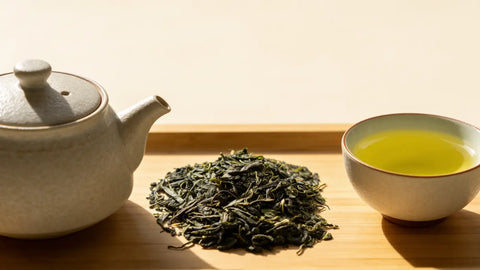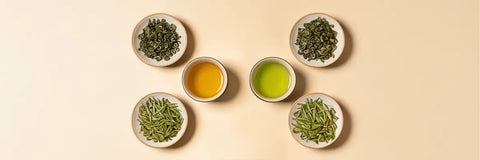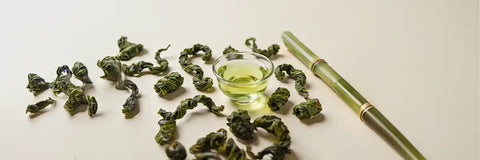
Tamaryokucha is a curled Japanese green tea known for its comma-shaped leaves, mellow flavour, and low astringency.
While sencha dominates Japan's tea landscape, this curled-leaf variety represents a quieter tradition rooted in the Kyushu island region, accounting for only around 2 to 3 percent of Japan's total tea output.
It goes by two names used interchangeably: the Japanese term meaning 'coiled green tea,' and guricha, a Kyushu dialect word simply meaning 'curly tea.'
What sets it apart is not just its appearance but how it tastes. Compared to sencha, the cup is softer on the palate, lower in astringency, and carries a layered flavour that holds across multiple infusions.
This article covers how the tea is made, how it differs from sencha, which regions produce it, and what to look for when buying it.
If you are building your knowledge of Japanese green tea varieties, this is an essential one to understand.
Tamaryokucha Is a Curled Japanese Green Tea Also Known as Guricha

Tamaryokucha is a curled Japanese green tea whose leaves naturally coil during processing rather than being shaped into the straight needles associated with sencha. The name (玉緑茶) translates literally as 'ball green tea' or 'coiled green tea' in Japanese, pronounced 'ta-ma-ryo-ku-cha.'
The alternative name guricha (ぐり茶) is more commonly used in the Kyushu region, particularly in Nagasaki and Saga prefectures. Both terms describe the same tea, and the choice between them often comes down to regional identity, with some producers preferring guricha on their packaging.
The curled leaf shape is not decorative. It is the direct result of skipping the final shaping step used in sencha production. Because the leaves are not pressed into needles, fewer leaf cells break during processing, which contributes to a smoother, less drying flavour and a gentler release of tannins across multiple steeps.
How Tamaryokucha Is Made
The production process follows the same early stages as sencha: harvesting fresh leaves in spring, then steaming them immediately to halt oxidation and preserve the vivid green colour. The divergence comes after steaming.
In sencha production, leaves are rolled and pressed into their characteristic straight needles. This curled-leaf variety skips that shaping stage entirely. The leaves are dried in a revolving drum, where they naturally twist and settle into the small, irregular coils that define the tea.
Steamed Tamaryokucha
The steamed version, known as mushiguri (蒸しぐり), is the most widely produced form and what most people mean when they say guricha. Steaming deactivates enzymes and locks in the leaf's natural compounds, producing a flavour that is vegetal and grassy with a notable sweetness.
Because it is steamed rather than fired, mushiguri retains a character close to other Japanese green teas. The result is a cup that is bright, smooth, and low in bitterness, with a liquor colour ranging from pale yellow-green to a deeper gold depending on steeping time.
Kamairicha Tamaryokucha Uses Traditional Pan-Firing
Kamairicha tamaryokucha is the pan-fired version of this curled-leaf tea, and beyond its distinctive roasty-floral character, the kamairicha benefits it offers make it worth understanding in its own right. Freshly harvested leaves are placed in a hot iron pan at temperatures between 300 and 450 degrees Celsius, creating a distinctive roasty, floral fragrance called kamaka that is absent in the steamed variety.
Pan-firing is a Chinese-origin technique, and kamairicha reflects that heritage. The flavour is drier and less vegetal than steamed guricha, with a lighter, toastier character. Miyazaki prefecture is particularly associated with high-quality kamairicha, where only a handful of producers still master the technique and brewing kamairicha correctly requires a slightly different approach than steamed guricha, given its drier, toastier character. The story of how pan-firing became part of Japanese tea culture is worth exploring on its own. 👉 Kamairicha: a Japanese Take on Chinese Tea
Tamaryokucha vs Sencha: What Sets Them Apart
Both are steamed Japanese green teas made from the same plant, harvested in the same seasons, and processed with similar equipment, but a closer tamaryokucha vs sencha comparison reveals how one processing step changes everything in the cup. The key difference is structural: sencha leaves are rolled and shaped into straight needles, while the curled variety is left to form its natural coil.
That single processing difference produces noticeable results in the cup. The coiled leaves release flavour gradually and mildly, with less astringency than sencha. Sencha tends to be brighter and more upfront, with a sharper umami note and a cleaner vegetal finish.
The intact leaf cells in the curled style slow the extraction of tannins and catechins. Drinkers who find sencha too sharp or too drying often find this cup more approachable, particularly across a second or third steep.
Flavor Profile of Tamaryokucha Green Tea
Aroma and Taste of Guricha

The flavour sits somewhere between sencha and gyokuro in terms of depth, without the intensity of either. The base profile is grassy and vegetal, with a tangy, berry-like quality on the mid-palate that is unusual among Japanese green teas.
A long, almondy aftertaste is characteristic of well-made guricha. Depending on cultivar and region, you may also detect notes of citrus, fresh-cut grass, steamed vegetables, and occasionally light floral undertones. The aroma is deep and herbaceous, with a sweetness that becomes more apparent as the cup cools.
The liquor brews to a pale yellow-green, often with a slightly warmer gold hue than sencha, partly due to the intact leaf structure releasing compounds more slowly.
The Role of Theanine and Cultivar
Its theanine content is comparable to that of other first-harvest Japanese green teas. L-theanine moderates caffeine's stimulant effect, producing calm alertness rather than a sharp spike. Because this tea is low in astringency, it is comfortable to drink across several infusions, and meaningful theanine intake accumulates naturally across a session.
The cultivar also shapes the flavour significantly. Yabukita, Japan's most planted tea cultivar, underpins most guricha production and delivers a reliable balance of sweetness and grassy depth. More unusual cultivars like Saemidori and Okumidori produce brighter, more floral variations when used.
Regions Famous for Tamaryokucha
Nagasaki
Nagasaki prefecture, and the Sonogi district in particular, is one of the most important production areas for Japan tamaryokucha. In this part of Kyushu, the curled-leaf tea is so embedded in everyday life that when people simply say 'tea,' they mean guricha. It is not a specialty item there but a household staple.
The Sonogi growing area benefits from mild temperatures, adequate rainfall, and hillside terrain that promotes slower leaf development and more concentrated flavour. Teas from this area express a clean, pleasantly vegetal character with low bitterness and accessible sweetness.
Miyazaki and Other Growing Areas
Tamaryokucha Miyazaki production is primarily associated with the pan-fired kamairicha style. The prefecture has a small number of remaining producers who specialise in this method, and their teas carry a distinctive roasty-floral character considered among the finest of its type in Japan.
Saga prefecture's Ureshino district is another significant area, known for steamed guricha with a particularly sweet character. Kumamoto also produces pan-fired versions, and Yame in Fukuoka, better known for gyokuro, offers a version with especially rich umami due to its mist-covered valley terrain.
Different Types of Guricha
Yabukita Guricha

Yabukita guricha is the most commonly produced style and the best entry point for understanding this tea. Yabukita is Japan's dominant cultivar, planted widely across Kyushu, and it produces a balanced, reliable cup with a clean grassy base, moderate sweetness, and a smooth finish.
For anyone new to this category, a first-harvest yabukita guricha from Sonogi or Ureshino is the most accessible starting point. The flavour is approachable and consistent, making it easy to understand the character of the tea before exploring other cultivar expressions.
Premium and Gyokuro-Style Grades
Premium grades come from first-harvest, young leaves processed with extra care at each stage. Some high-end producers apply shading techniques similar to those used for gyokuro, covering the plants before harvest to increase chlorophyll and theanine content. The result is a richer, more umami-forward cup that bridges the gap between standard guricha and shade-grown tea.
These shaded versions are rare and produced in small quantities. They tend to have a darker leaf colour, a noticeably sweeter aroma, and less bitterness than their unshaded counterparts. If you find them from a reputable Japanese tea supplier, they are worth seeking out.
How Tamaryokucha Fits into Japanese Tea Culture
In the broader landscape of Japanese green tea, this curled variety occupies an unusual position. It is simultaneously an everyday household tea in parts of Kyushu and a niche speciality that most tea drinkers outside Japan have never encountered.
It was originally developed in the early 20th century as an export product, designed to resemble the curled-leaf shape of Chinese pan-fired teas for markets in Russia and the Middle East. Steamed guricha was introduced around 1925, offering the look of a pan-fired tea while using Japan's steaming method.
Today, the variety accounts for roughly 2 to 3 per cent of Japan's total tea production, making it genuinely rare even within the country. For those exploring Japanese tea beyond sencha and matcha, it offers a meaningful window into the diversity of Kyushu's tea culture. Nio Teas carries a curated selection of Japanese loose-leaf teas for drinkers looking to explore varieties beyond the familiar. If you are new to Japanese tea and want a broader view before diving in, this is a useful starting point. 👉 14 different Teas of Japan
Why More Tea Drinkers Are Discovering Tamaryokucha

Interest in this curled-leaf tea has grown among enthusiasts who have already explored sencha and matcha and are looking for something with a different texture and complexity. Its lower astringency makes it forgiving to brew, though knowing the right tamaryokucha brewing parameters helps bring out the tea's almondy aftertaste and layered sweetness across multiple infusions.
It is also gaining attention among those curious about types of Japanese green tea that sit outside the mainstream. Unlike gyokuro, which requires careful brewing and carries a more concentrated, acquired taste, this cup is mellow enough to enjoy casually while still offering genuine depth when brewed with care.
If you are already exploring Japanese green tea, reading about how different varieties are cultivated and processed across Japan's tea regions gives useful context for understanding what is in your cup. This is a tea that rewards a little background knowledge, and once you understand what shapes its character, it becomes one of the more compelling options in the Japanese green tea family.